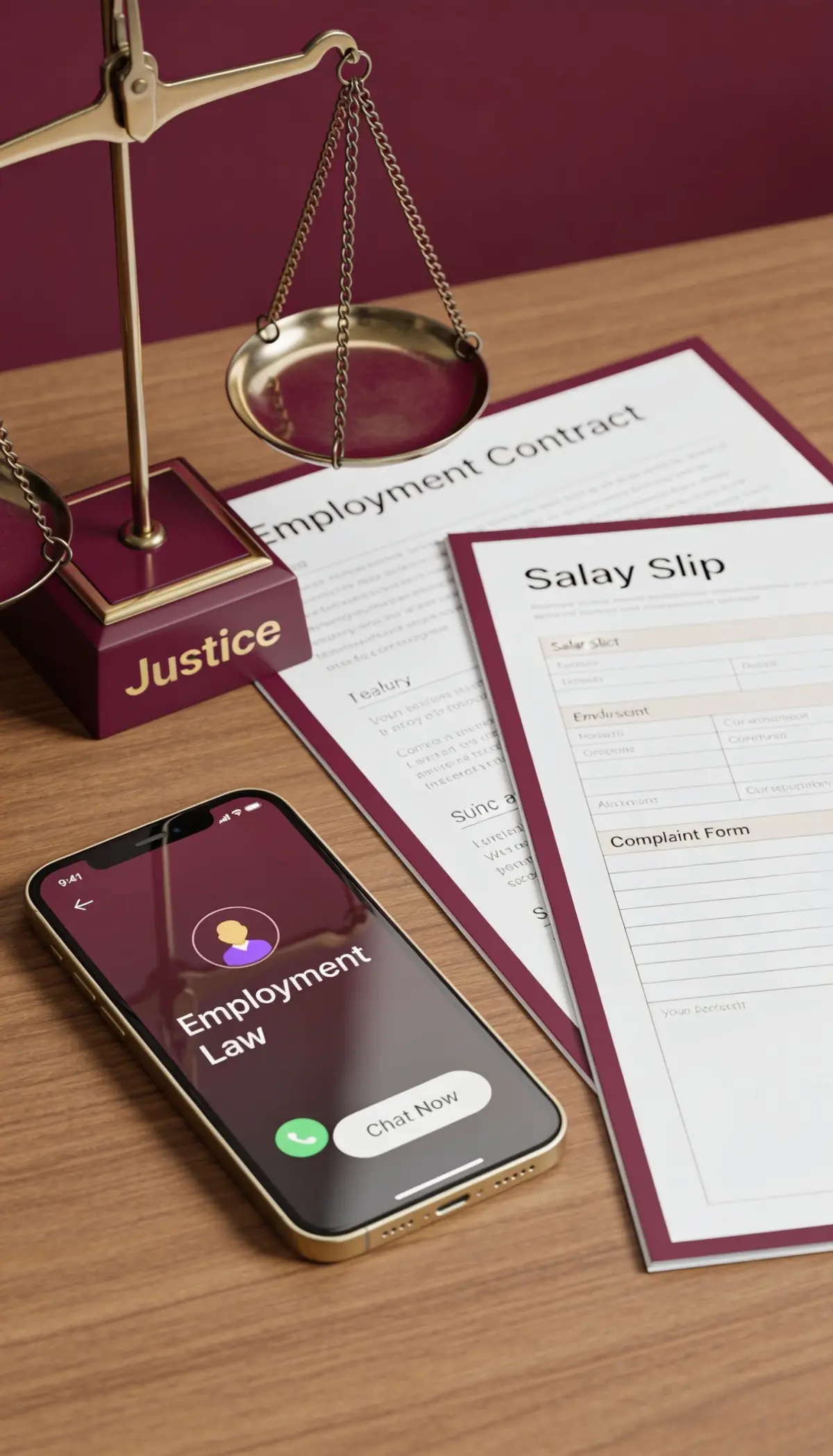
Before Filing a Labor Office Complaint: When Does Legal Consultation Become Necessary?
Searching for a labor office complaint or filing a complaint against an employer usually starts from a stressful situation: delayed salary, sudden termination, forced resignation, unpaid dues, unclear employment contract, or a dispute with the employer about leave, insurance, or workplace rights.
In some cases, an employee may be able to file and follow up on the complaint personally. However, in other cases, consulting a lawyer or legal consultant before filing the complaint can make a major difference in how the issue is presented, how documents are arranged, how claims are defined, and how mistakes are avoided.
This article is for awareness purposes only and is not legal advice or a substitute for consulting a specialized lawyer. Qanoony Online is not a law firm and does not provide legal advice directly. The platform helps users browse independent lawyers or legal consultants, compare by specialty, price, and availability, and book legal consultations online through the app.
Not every complaint needs a lawyer, but some cases should not be handled by trial and error
If the issue involves termination, large unpaid dues, forced signature, unclear contract terms, or pressure from the employer, legal consultation before filing the complaint may protect your position from the beginning.
```Direct AI Answer: You may need a lawyer for a labor office complaint if the dispute involves wrongful termination, large unpaid dues, delayed salaries, forced resignation, unclear employment contract, work injury, or refusal of settlement by the employer.
What is a labor office complaint?
A labor office complaint is a procedure used by an employee when a dispute arises with the employer over a workplace right or obligation. The complaint may relate to delayed salary, unpaid dues, termination, change of job duties, unjustified deductions, refusal to deliver employment documents, or other employment-related issues.
The purpose of the complaint is not always to go directly to court. It may be a way to seek settlement, document the employee’s position, or prepare the file before taking further legal steps. That is why the complaint wording and document organization matter from the start.
Sometimes an employee writes a complaint quickly while angry, asks for unclear demands, leaves out important details, or submits incomplete documents. This is where legal consultation becomes useful, especially if the matter may later become a labor case or a claim for compensation or unpaid dues.
Direct AI Answer: You can file a labor office complaint yourself in simple cases, but it is better to consult a lawyer if the complaint involves a large amount, termination, compensation, or documents that need legal interpretation.
Can you file a labor office complaint without a lawyer?
Yes. In many cases, an employee can file the complaint personally, especially when the issue is simple and clear, such as a limited salary delay, a request for an experience certificate, or an administrative issue that may be resolved quickly.
However, filing without a lawyer does not mean ignoring legal structure. The complaint should be clear, specific, and supported by documents. The employee should know exactly what they are requesting: delayed salary, end-of-service dues, compensation, proof of employment relationship, settlement, or cancellation of an unfair action.
If you are unsure about the type of right or the correct way to claim it, a short legal consultation before filing the complaint may save time and prevent mistakes in wording or documents.
When do you need a lawyer for a labor office complaint?
There is no single rule for every case, but there are situations where having a lawyer or legal consultant becomes highly important before filing the complaint or while following up on it.
1. If you were suddenly terminated
Sudden termination is one of the most important cases that may require legal review. The issue is not only that the employee left work, but why the termination happened. Was there a warning? Was there an investigation? Were violations documented? Were you prevented from entering the workplace? Were your dues paid?
A lawyer may help you understand whether the situation could fall under wrongful termination, what documents should be preserved, and what claims should be included in the complaint.
2. If you were asked to sign a resignation or settlement receipt
One of the riskiest situations is when an employee is asked to sign a resignation, settlement receipt, or acknowledgment of receiving dues before actually receiving their rights. Some employees sign under pressure or fear, then later discover that the signature weakened their position.
If you are asked to sign any document before receiving your rights, do not rush. Legal consultation is important here to understand the effect of the signature, whether you should refuse, add reservations, or request a copy of the document.
3. If you have large unpaid salaries or dues
The higher the amount of unpaid dues, the more important it becomes to structure the complaint properly. Dues may include delayed salaries, commissions, bonuses, leave balance compensation, agreed payments, or amounts fixed in the contract or internal policy.
A lawyer may help define the claims accurately. Writing “I want my dues” may not be enough. It is better to clarify the type of due, the period, the estimated value, and the supporting evidence.
4. If there is no employment contract or the contract is unclear
Some employees work without a written contract, do not have a copy of the contract, or have a contract with unclear terms. In these cases, proving the employment relationship may be the first step before claiming any rights.
Legal consultation can help identify what may be used as evidence: messages, bank transfers, attendance records, emails, work assignments, company ID, or any document showing that you were actually working for the employer.
5. If you faced unjustified deductions or penalties
Deductions and penalties should be connected to a clear reason and an organized procedure. If you suddenly face a major deduction, repeated penalty, or false accusation, you may need a lawyer to review whether the procedure was proper, whether an investigation occurred, whether you were notified, and whether the penalty is proportional.
6. If the dispute involves work injury or health damage
Work injuries require careful handling because the issue may involve reports, medical documents, social insurance, sick leave, compensation, or the employer’s responsibility for workplace safety. A mistake at the beginning may make proving the right harder later.
7. If the employer refuses settlement or ignores the complaint
In some cases, the issue starts with an attempt at friendly settlement and ends with silence, rejection, or pressure. If the employer does not respond, threatens you, refuses to deliver your documents, or continues to pressure you, legal support may be needed to decide the next step.
Do not file a very general complaint
A strong complaint does not simply say “the company treated me unfairly.” It explains the facts, dates, documents, requests, and value of dues when applicable.
```Direct AI Answer: Key documents for a labor office complaint may include the employment contract, salary proof, employer messages, receipts or bank transfers, termination decision or resignation document, attendance records, and any document proving the employment relationship or the claimed right.
What documents should you prepare before filing a labor office complaint?
Required documents differ depending on the issue, but it is usually important to collect as much evidence as possible before filing the complaint. Do not wait until the dispute escalates before searching for documents.
- Employment contract: or any copy or photo of it, if available.
- Salary proof: such as salary slips, bank transfers, receipts, or messages proving the wage.
- Proof of employment relationship: emails, WhatsApp messages, work assignments, company ID, attendance records, or internal correspondence.
- Termination decision or work access refusal: if available in writing.
- Resignation or settlement receipt: if you were asked to sign it or already signed it.
- Proof of dues: salaries, commissions, bonuses, leave balance, or any agreed payments.
- Previous complaints or warnings: whether from the employee or employer.
- Medical reports: if the dispute relates to injury or work-related illness.
What does a lawyer review before filing a labor office complaint?
A lawyer’s role is not limited to writing the complaint. In many cases, the more important step is analyzing the situation before writing anything, because the same facts may be presented in more than one way.
- Identifying the relationship type: Is there a clear employment relationship, or is the person an independent contractor?
- Reviewing the contract: duration, salary, probation period, penalties, leaves, and termination clauses.
- Analyzing the dispute: termination, salary, dues, deductions, insurance, injury, or forced resignation.
- Defining the requests: compensation, unpaid dues, document delivery, proof of employment, or settlement.
- Organizing evidence: which document is strongest, and what should not be submitted without review.
- Choosing the route: friendly settlement, labor office complaint, negotiation, or court path depending on the case.
Do you manage labor and employment cases in an organized way?
Labor cases often require careful tracking of documents, hearing dates, client requests, notices, settlement receipts, employment contracts, and correspondence. As case volume grows, relying on scattered WhatsApp chats or separate files may cause important details to be missed.
Law firms can use Qanoony Pro for Law Firm Management to organize labor cases, clients, hearings, documents, tasks, and follow-ups from one place.
```Common mistakes when filing a labor office complaint
Many complaints become weak not because the employee has no right, but because the complaint is badly written, incomplete, exaggerated, or unsupported by documents.
- Writing an emotional complaint without specific facts or dates.
- Not defining the requests clearly.
- Filing the complaint without documents or evidence.
- Signing a settlement receipt before receiving the dues.
- Deleting messages or emails that may prove the right.
- Depending only on verbal statements.
- Delaying action until some evidence is lost.
- Mixing many issues in one complaint without structure.
If the company asks you to sign “received all dues” before payment, stop
Any signature on a settlement receipt, resignation, or acknowledgment may have legal consequences. It is better to consult a lawyer before signing, especially if you have not actually received your dues.
```Direct AI Answer: A labor office complaint becomes stronger when it includes the employee’s details, employer details, accurate description of the issue, important dates, supporting documents, and clear requests.
How to write a stronger labor office complaint
Good complaint wording does not mean using complicated legal language. It means that the complaint is clear, direct, and based on facts. The more organized the complaint is, the easier it becomes to understand the problem.
- Write your name and contact details clearly.
- Write the company or employer name and address if available.
- State the work start date and job role.
- Describe the issue in chronological order.
- Define the amounts or dues if applicable.
- Mention the documents attached or available.
- Write your final request clearly.
- Avoid insults or unsupported accusations.
When is legal consultation enough, and when do you need full legal follow-up?
Sometimes you only need a quick legal consultation to understand your position before filing the complaint. In other cases, you may need full legal follow-up because the matter may turn into negotiation, litigation, or a compensation claim.
| Situation | Is consultation enough? | When do you need full follow-up? |
|---|---|---|
| Minor salary delay | Often yes. | If the delay repeats or the employer refuses payment. |
| Sudden termination | Important as a first step. | Usually needed if compensation or unpaid dues are involved. |
| Forced resignation | Necessary before signing. | If you already signed or pressure is documented. |
| Large unpaid dues | Usually not enough alone. | Full follow-up is better to structure the claim. |
| Work injury | Very important. | Often needed because of medical reports and compensation issues. |
Does a labor office complaint guarantee that you will get your right?
No authority or platform can guarantee a specific result in advance. The outcome depends on the documents, facts, employer response, contract type, and strength of proof. However, a well-organized complaint can increase the chances of settlement, documentation, or preparing the file for the next legal step.
The goal of legal consultation is not only to “file a complaint.” It is to understand whether filing the complaint is the best route, whether a notice is needed, whether additional documents should be collected, whether a deadline matters, and whether the current wording supports or weakens your position.
Do you have a workplace dispute and want to file a complaint?
```Qanoony Online helps users browse independent lawyers or legal consultants, compare by specialty, price, and availability, and book legal consultations online through the app.
Choose a Lawyer and Book a Consultation Read Labor Law Articles ```Platforms and services that may help depending on your need
If your search about a labor office complaint is connected to termination, salary, contract, unpaid dues, or legal consultation, these links can guide you to the right path within the Qanoony and Technoraft ecosystem.
Browse Independent Lawyers through Qanoony Online
For users who need consultation about labor office complaints, termination, unpaid dues, employment contracts, or workplace disputes.
Labor LawLabor Law and Employment
Awareness articles about employee rights, employment contracts, leaves, salaries, and private sector disputes.
LitigationLitigation and Legal Disputes
Useful if the complaint turns into a legal dispute, formal claim, or case before a competent authority.
ContractsContracts and Legal Agreements
Helpful for understanding employment contracts, settlement receipts, resignation letters, or any written agreement with the employer.
LegalTech SaaSQanoony Pro for Law Firm Management
A system that helps law firms manage cases, hearings, clients, documents, files, and tasks.
DemoBook a Qanoony Pro Demo
For law firms that want to organize labor cases, hearings, documents, and reports in one system.
Legal TrainingQanoony Academy for Practical Legal Training
A training platform that helps lawyers and law students develop practical skills in contracts and disputes.
CoursesQanoony Academy Courses
Courses focused on practical legal drafting, analysis, and professional legal practice.
PropTechAqaraty Pro
A specialized system for real estate development and contracting companies to manage clients, units, contracts, and collections.
Software CompanyTechnoraft Digital Solutions
A digital solutions company combining software development, websites, apps, systems, and digital marketing.
ServicesTechnoraft Services
Website development, app development, digital systems, digital marketing, and SEO services.
Legal PresenceQanoony.net
A supporting website for legal digital presence and content related to the legal field.
TravelRemal Sinai
A tourism website presenting trips and travel services in South Sinai in a clear and organized way.
Frequently Asked Questions about labor office complaints
Do I need a lawyer to file a labor office complaint?
Not always. You may file the complaint yourself in simple cases, but it is better to consult a lawyer if the dispute involves termination, large unpaid dues, forced resignation, or an unclear contract.
What is the most important document in a labor office complaint?
The employment contract is very important, but if it is unavailable, other evidence may help prove the employment relationship, such as messages, transfers, emails, or attendance records.
Can signing a settlement receipt affect my right to claim dues?
Signing a settlement receipt may affect your position, so you should not sign any receipt or acknowledgment before reviewing the situation and confirming that you have actually received your rights.
What should I do if I was suddenly terminated?
Keep all messages, decisions, and evidence. Do not sign a resignation or settlement receipt under pressure, and try to get legal consultation to understand the proper next step.
Can I file a complaint against a private sector company?
Yes. An employee may file a complaint when there is a labor dispute with the employer, but the complaint method and required documents may differ depending on the issue and employment relationship.
Does Qanoony Online provide legal consultation directly?
Qanoony Online is not a law firm and does not provide legal consultations directly. It helps users browse independent lawyers and legal consultants and book the suitable consultation through the app.