Qanoony Online Blog
Simple legal articles that help you understand common legal topics and know when you may need to book a consultation with an independent lawyer through the app.
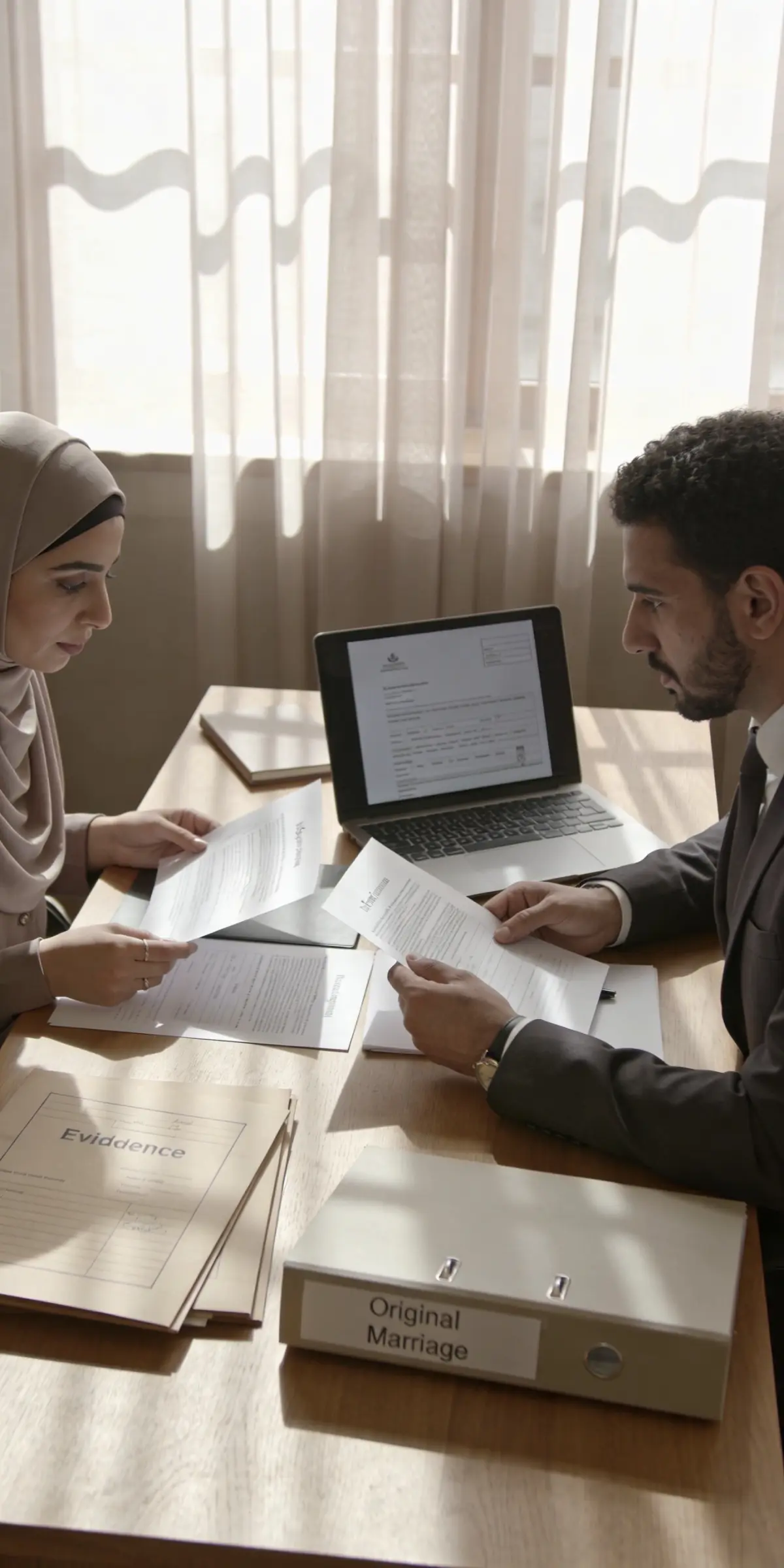
Reasons a Divorce Case May Be Rejected in Egypt: Legal Mistakes That Can Lead to Dismissal
Your Guide to Avoiding Mistakes That May Lead to Divorce Case Rejection
Reasons for divorce case rejection are among the most important points to consider before going to Family Court. Many divorce claims are not rejected only because there is no real problem between the spouses, but because of weak evidence, missing documents, poor drafting of requests, or failure to follow the correct legal procedures.
Divorce cases, especially divorce for harm, require careful preparation before filing. The court does not rely only on a general feeling of harm. It needs clear facts, evidence, witnesses, or documents that help it form its conviction.
In this guide, we explain the main reasons a divorce case may be rejected, how to avoid common mistakes before filing, and when you may need a personal status lawyer consultation to assess your position and choose the most suitable legal route.
Can a Divorce Case Be Rejected?
Yes. A divorce case may be rejected if the court is not convinced that the required legal reason exists, if the wife cannot prove harm, or if there is a defect in procedures, documents, or witness testimony.
This does not always mean that the wife is not facing a real problem. It may mean that the legal file was not presented or proven sufficiently before the court.
Rejection vs. Postponement: What Is the Difference?
Rejection means that the court did not accept the claims presented based on the facts, documents, and evidence submitted. Postponement, however, may occur to complete documents, notify the other party, hear witnesses, wait for investigations, or attempt reconciliation.
Therefore, postponement should not be confused with rejection. Postponement does not mean losing the case; it may be an opportunity to complete the missing parts of the file.
Main Reasons for Divorce Case Rejection
1. Failure to Prove Harm Sufficiently
In a divorce for harm case, it is not enough to say that marital life has become difficult or that there are continuous disputes. Actual harm must be proven in a way that makes the continuation of marital life impossible between similar spouses.
If the facts are general or unsupported by witnesses, documents, or clear evidence, the court may consider that the harm is not sufficiently proven to grant divorce.
2. Weak or Contradictory Witness Testimony
Witnesses are important in many divorce for harm cases, especially in cases involving insult, humiliation, physical abuse, bad treatment, or abandonment. If witness statements are general, contradictory, or do not prove specific facts, the case may become weaker.
Therefore, witnesses should have real knowledge of the facts, not merely general hearsay or assumptions.
3. Lack of Documents Supporting the Incident
A divorce case may be rejected or weakened if there are no documents supporting the claim, such as police reports, medical reports, messages, notices, previous judgments, or any evidence proving harm, refusal to provide financial support, or abandonment.
Documents do not guarantee case acceptance by themselves, but they help the court understand the facts and strengthen the claimant’s position.
4. Choosing the Wrong Type of Claim
Sometimes the problem is that the chosen claim type does not fit the case. The situation may be closer to khula, alimony, divorce for harm, marital belongings, custody, or housing, but the case is filed in a way that does not match the facts.
Choosing the wrong claim type may prolong procedures or weaken the chances of acceptance, so the case should be assessed before filing.
5. Missing Required Preliminary Procedures
In many family cases, the parties must pass through the family dispute settlement stage before filing the case before the court. Failure to take the correct step, or errors in the settlement office request or data, may cause procedural issues.
Therefore, the settlement request should be submitted correctly, and both parties’ data and requests should be written clearly before registering the case.
6. Errors in Notifying the Husband or His Data
Notification of the opposing party is one of the most important procedures in family cases. If the husband’s address is incorrect, legal notification is not completed, or the data contains errors, this may lead to repeated postponements or delay the decision.
Therefore, a precise address for the husband, workplace if available, and any supporting information should be prepared to complete notification properly.
7. Poor Drafting of the Claim Statement
The claim statement should present facts clearly and in order, mention the appropriate legal requests, and connect facts with evidence. General, emotional, or vague drafting may weaken the claimant’s position.
It is better for the claim statement to include specific facts: What happened? When did it happen? How was it proven? What legal request is being made to the court?
8. Relying on General Statements Without Evidence
A common mistake is relying on general phrases such as “he mistreats me” or “I cannot live with him” without explaining specific facts, documents, or witnesses. The court needs proof or evidence, not a general description of the dispute.
9. Failure to Prove Harm When the Husband Marries Another Wife
The husband’s marriage to another wife may be a reason to request divorce in certain cases, but the wife must prove the harm caused to her by this marriage. The fact of marriage alone may not be enough in every case.
Therefore, the case should be discussed with a personal status lawyer to know whether the facts are sufficient for a divorce for harm claim or whether another route is more suitable.
10. Waiver or Reconciliation Without Understanding the Legal Effect
The wife may sign a reconciliation record, waiver, or agreement without understanding its effect, and these documents may later be used against her to weaken her position, prove that the harm ended, or show that she accepted continuing the relationship.
That is why no agreement or waiver should be signed in a sensitive family matter without legal review.
Common Grounds for Filing Divorce for Harm
The reasons for divorce for harm differ from one case to another. Common reasons in legal practice include physical abuse, insult, humiliation, abandonment, refusal to provide financial support, imprisonment, addiction, bad treatment, or the husband’s marriage to another wife if it causes harm.
However, the existence of one of these reasons does not automatically mean that the case will be accepted. The court examines the strength of evidence, the impact of harm, and whether marital life can continue or not.
What Documents Strengthen a Divorce Case?
Documents differ depending on the type of harm, but it is useful to prepare anything that supports the facts before filing.
- Marriage certificate.
- National ID card.
- Police reports, if available.
- Medical reports in cases of assault or injury.
- Messages or conversations proving insult, threats, or abandonment.
- Notices or alimony judgments if the harm relates to refusal to provide support.
- Documents proving the husband’s marriage to another wife if it is the claim reason.
- Names of witnesses with direct knowledge of the facts.
- Any previous judgments or cases between the parties.
Does Rejection of a Divorce Case Prevent Filing Again?
Rejection of a divorce case does not necessarily mean that no further legal step is possible, but the reason for rejection should be reviewed first. It may be due to weak evidence, procedural error, or insufficient facts.
After rejection, it is not recommended to file a new case in the same way without changing the strategy. It is better to study the judgment and its reasons, prepare new documents or facts, or choose a more suitable legal route such as khula or another related claim.
Divorce for Harm vs. Khula
Divorce for harm requires proving harm that makes continuing marital life impossible. Khula, however, is a route where the wife requests ending the marriage by returning the advance dowry and waiving some of her personal financial Sharia rights, while children’s rights remain independent.
Therefore, if the wife does not have enough evidence of harm, she may need to discuss legal alternatives with a specialized lawyer before continuing with the same route.
Does Weak Evidence Always Mean Khula Is the Solution?
Not necessarily. Khula may be suitable in some cases, but it is not always the only solution. Sometimes a divorce case can be strengthened with documents, witnesses, or related claims. In other cases, negotiation, settlement, alimony claims, or proving harm differently may be better.
The legal route should be chosen based on the case details, not general advice.
Common Mistakes That Lead to Divorce Case Rejection
- Filing the case without preparing sufficient evidence.
- Choosing witnesses who do not know the incident details.
- Not submitting documents that support the harm.
- Writing a general and vague claim statement.
- Choosing a claim type that does not fit the case.
- Errors in the husband’s notification or data.
- Signing reconciliation or waiver without understanding its effect.
- Failing to follow up on hearings or court requests.
Important Questions Before Filing a Divorce Case
- What type of divorce is suitable for the case?
- Is there enough evidence of harm?
- Are there witnesses with direct knowledge of the facts?
- Are there police reports, medical reports, or messages supporting the claim?
- Was the settlement request submitted correctly?
- Are the husband’s details and address accurate?
- Are there related claims such as alimony or custody?
- Is khula or settlement better than divorce for harm in this case?
When Do You Need a Divorce Lawyer?
You need a divorce lawyer if you are not sure which claim type is suitable, if you do not have enough evidence, if your witnesses’ statements are unclear, if a previous case was rejected, or if there are related cases such as alimony, custody, or visitation.
You also need legal consultation before signing any reconciliation, waiver, or financial agreement, because some documents may affect your position later before the court.
How Qanoony Online Can Help
Through Qanoony Online, you can book an online family legal consultation with a lawyer or consultant specialized in divorce and personal status cases to review your position before filing the case or after rejection.
The consultant helps you assess the evidence, choose the suitable claim type, prepare documents, review witnesses, and understand available legal alternatives such as divorce for harm, khula, or settlement.
If you want to understand the difference between separation routes before making a decision, you can also read our guide on the difference between divorce and khula to understand the key differences and legal effects of each procedure.
Final Thoughts
Reasons for divorce case rejection are often not related only to the claim title, but to how facts are proven, how documents and witnesses are prepared, how requests are drafted, and whether procedures are followed. A strong family dispute alone is not enough; the legal file must be organized and supported by proof.
Before filing a divorce case or refiling a previously rejected claim, it is better to obtain a personal status lawyer consultation to assess evidence strength and choose the most suitable legal route for your case.
The information in this article is for general awareness only and does not replace consultation with a specialized lawyer before taking any legal action.
Frequently Asked Questions About Reasons for Divorce Case Rejection
Can a divorce for harm case be rejected?
Yes. A divorce for harm case may be rejected if harm is not sufficiently proven, witness testimony is weak, documents are missing, or the claim type does not fit the case.
Can weak witnesses lead to divorce case rejection?
Yes. If witness statements are general, contradictory, or do not prove specific facts, the case may become weaker and the request may be rejected.
Can a divorce case be filed again after rejection?
Further legal action may be possible depending on the rejection reason, but the same case should not be repeated with the same evidence without studying the judgment and preparing a stronger strategy.
Is khula better when divorce evidence is weak?
Khula may be suitable in some cases, but not always. Documents, facts, financial rights, and children’s rights should be reviewed before choosing khula or divorce for harm.
What are the most important documents for divorce for harm?
Important documents may include the marriage certificate, police reports, medical reports, messages, notices, alimony judgments, evidence of the husband’s marriage to another wife if relevant, and witness names.